Ocean Acidification and pH
A solution is when a solute is dissolved in a solvent. The solvent is what there is more of. The things that will affect how much solute you can dissolve are temperature, pressure, and molecular structure. Seawater is one example of a solution with water as the solvent. The solutes are salt, minerals from the ocean floor, runoff, and atmospheric gasses.
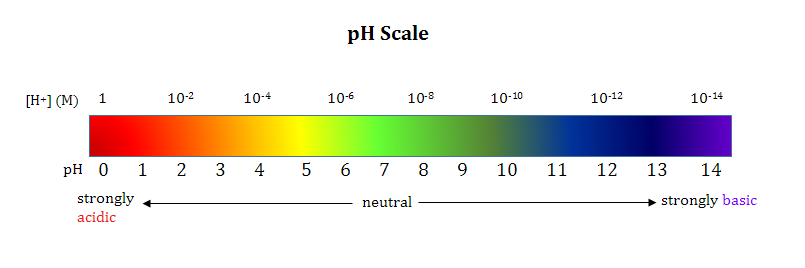
When atmospheric carbon dioxide dissolves in seawater, it creates an acid. Higher amounts of CO2 in the atmosphere mean that the ocean absorbs more and becomes more acidic. This is called ocean acidification. We can use pH to measure the ratio of H+ ions to OH- ions in a solution like seawater, and see how acidic the ocean is. A pH of 7 is neutral, a pH of 14 is a strong base like bleach or drain cleaner, and a pH of 1 is a strong acid like battery acid.
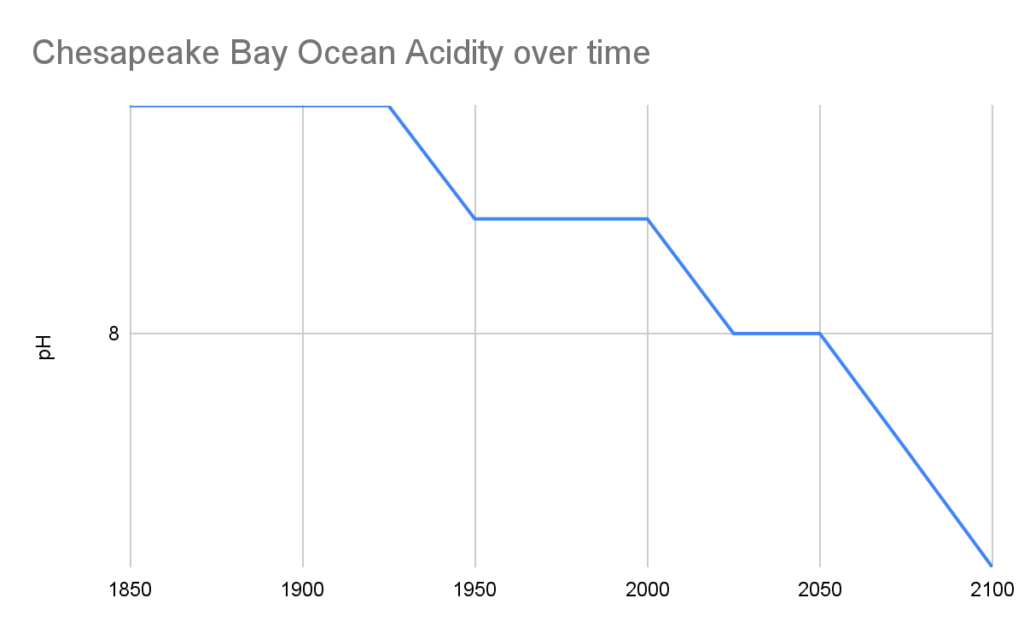
Over time, ocean pH has decreased. As the ocean gets more acidic, it weakens crustacean shells because the hydrogen ions take away the stuff that the animals use to make their shells. This provides a temporary buffer on the bay becoming more acidic but eventually it will kill off the shellfish, removing both the buffer and a vital food source. (https://www.umces.edu/content/researchers-eye-acidification-chesapeake-bay)