The Carbon Cycle
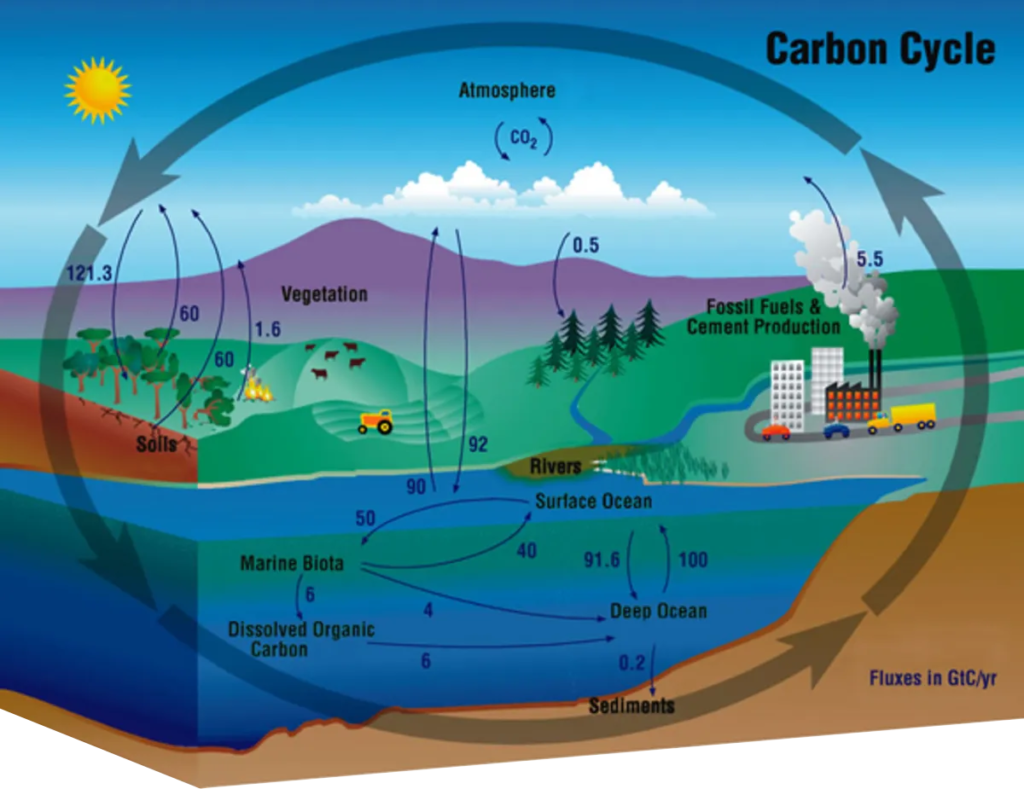
Fossil fuels like coal and petroleum release CO2 when we burn them. The ocean absorbs a lot of this CO2, which helps keep our atmosphere livable. In fact, oceans are likely to have absorbed 30 to 50% of the CO2 produced by the increase in burning fossil fuels in the past 200 years (Carbon Cycle). Unfortunately, this CO2 reacts with chemicals in the ocean to increase acidification.
Ocean acidification is when the amount of carbon dioxide is too high, and the ocean absorbs the extra and holds it. This raises its pH and makes it more acidic. For more information, go to pH and Ocean Acidification.
pH is a measure of how acidic a solution is. A solution is when a solute is dissolved in a solvent. The solvent is the one there’s more of. The factors that will affect how much solute you can dissolve are temperature, pressure, and molecular structure. The molarity is the units of solute per liter of solvent. Molality is moles of solute per kilogram of solvent. Mass percent is the mass of solute divided by the mass of solution times 100.